There is one kind of human on Earth. Most people assume it has always been that way, and it is one of the strangest things about our situation that it has not.
Here is every human species we currently know of.
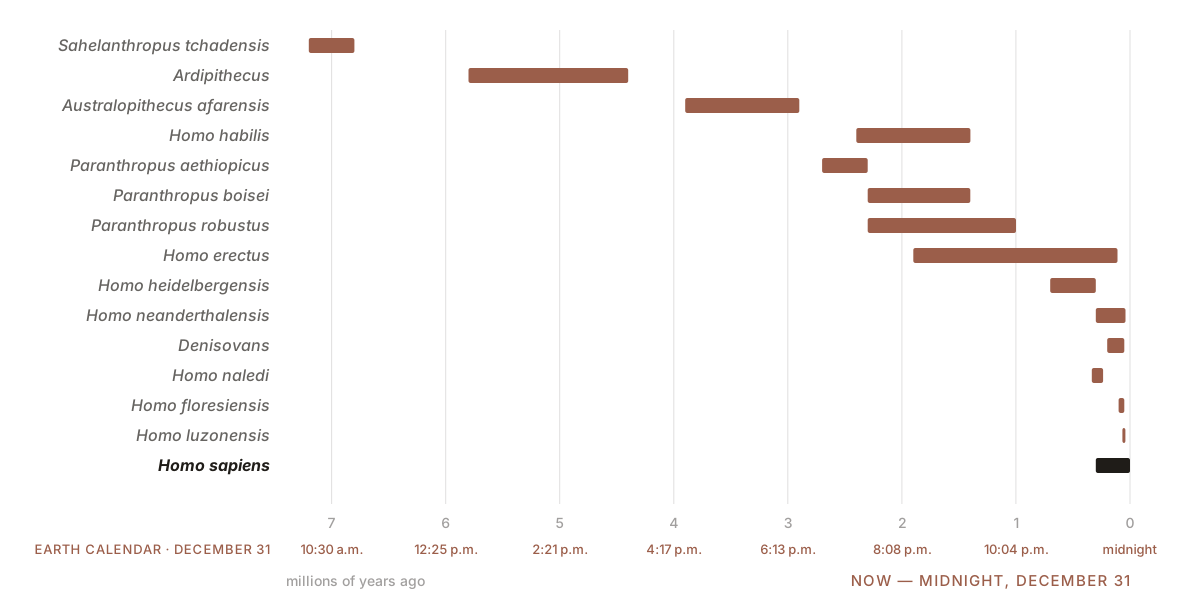
Every diagram in this book carries the Earth Calendar along its foot, and here it does something worth stopping on. The entire chart above (all fifteen species, all 7.4 million years) is a single day. It begins at about a quarter to ten on the morning of December 31 and it ends at midnight. Every human being who has ever lived, of any species, fits inside those fourteen hours.
Almost none of these are ancestors of yours. That is the first thing the picture corrects. This is not a ladder with us on the top rung; it is a bush, most of whose branches simply end. Paranthropus boisei chewed its way through a million years and left no descendants at all. Homo naledi was burying, or at least depositing, its dead in a South African cave while our own species was already alive somewhere to the north, and it is not on our line either.
The second thing the picture corrects is rarer, and it is the reason this page exists. Look at how often the bars overlap.
The last four hundred thousand years
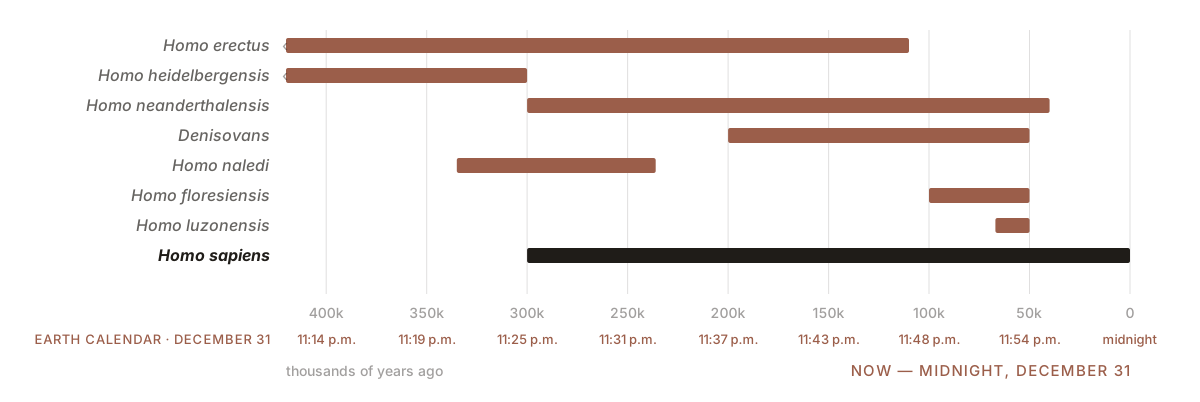
On the calendar, this second chart is the last forty-nine minutes of the year, from eleven minutes past eleven at night to midnight. Our own species appears at 11:25 p.m.
Sixty thousand years ago there were at least five kinds of human alive at the same time.
Neanderthals across Europe and western Asia. Denisovans somewhere east of them, known mostly from a fingertip, a jaw and their DNA. Homo floresiensis, a meter tall, on an Indonesian island. Homo luzonensis, also small, also on an island, in the Philippines. And us.
They were not our ancestors and they were not brutes on a lower rung. They were contemporaries. Some of them we met, and the meeting is still in us: most people reading this carry Neanderthal DNA, and many carry Denisovan.
Then, in about twenty thousand years, there was one.
We are not the winners of a competition. That framing is a story we tell afterward, and the evidence for it is thin. We are the ones still in the room. And a species that has never once, in its whole existence, had to share the world with another mind of its own order is a species with a particular blind spot about what minds are, and who has one.
Further back
Now widen it. Every one of those species is crowded into the right-hand edge of the next diagram: the whole human family, all fifteen bars, is the last seven million years, and here is what the ninety before them look like.
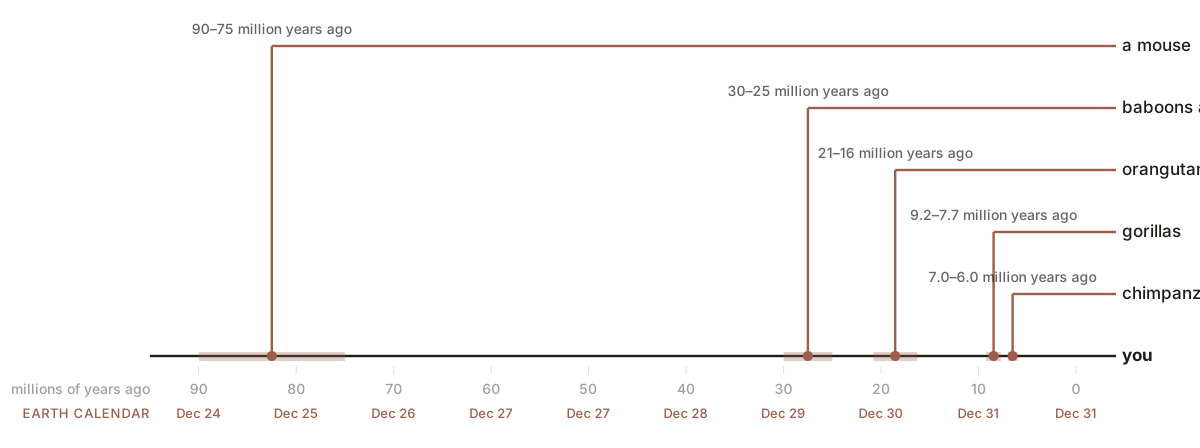
Read it from the right. Chimpanzees are about six million years back, a little short of where Sahelanthropus sits on the chart above, which is to say the entire human family and the entire chimpanzee family are very nearly the same length of time. Gorillas a little further. Orangutans a good deal further, and the studies argue about how much.
And then a long, quiet stretch of line, and a mouse.
Somewhere between seventy-five and ninety million years ago there is a small animal: shrew-like, warm-blooded, awake at night, living on insects, in a world still run by dinosaurs. It is the direct ancestor of every mouse alive today. It is also the direct ancestor of you, and of everyone you have ever loved.
It was going about its business roughly ten million years before the asteroid, and everything on this page is downstream of the fact that its descendants were small enough to survive what came next.
The book opens with that animal, and with the three words the preface spends five pages earning:
The two lines meet.